Kingman's Dual-Season Climate: Why Spray Foam Beats Batts for Both Summer Heat and Winter Cold
"Isn't Arizona insulation just about beating the heat?" It's a fair question, and for most of the state's population centers, the answer is close to yes. But Kingman is a genuine exception, and it's worth understanding why before you insulate your home the way a Phoenix contractor would.
Same code zone, different climate in practice
Kingman falls in IECC Climate Zone 3B — technically the same building-code zone as Phoenix. But Kingman sits at roughly 3,336 feet of elevation, well above the Phoenix metro's low-desert floor, and that elevation brings a real winter. Average January lows sit near freezing, and the area has recorded hard freezes overnight. Summer highs still commonly reach 90-100°F, so the heat challenge is real too — Kingman just adds a second season most low-desert insulation advice doesn't account for.
Why that matters for how you insulate
A pure cooling-climate strategy optimizes for one thing: keeping summer heat out. That's still important in Kingman, but a home built or insulated that way alone will underperform on cold winter nights, when the same gaps and thin spots that let summer heat in also let winter warmth escape. The 2021 IECC baseline for Zone 3 attics is R-49, a number that reflects this dual load — not the lower R-values sometimes cited for pure hot-dry Zone 2 markets, and not the higher R-values used in genuinely cold Zone 5+ climates either.
Why spray foam handles both seasons better than batts
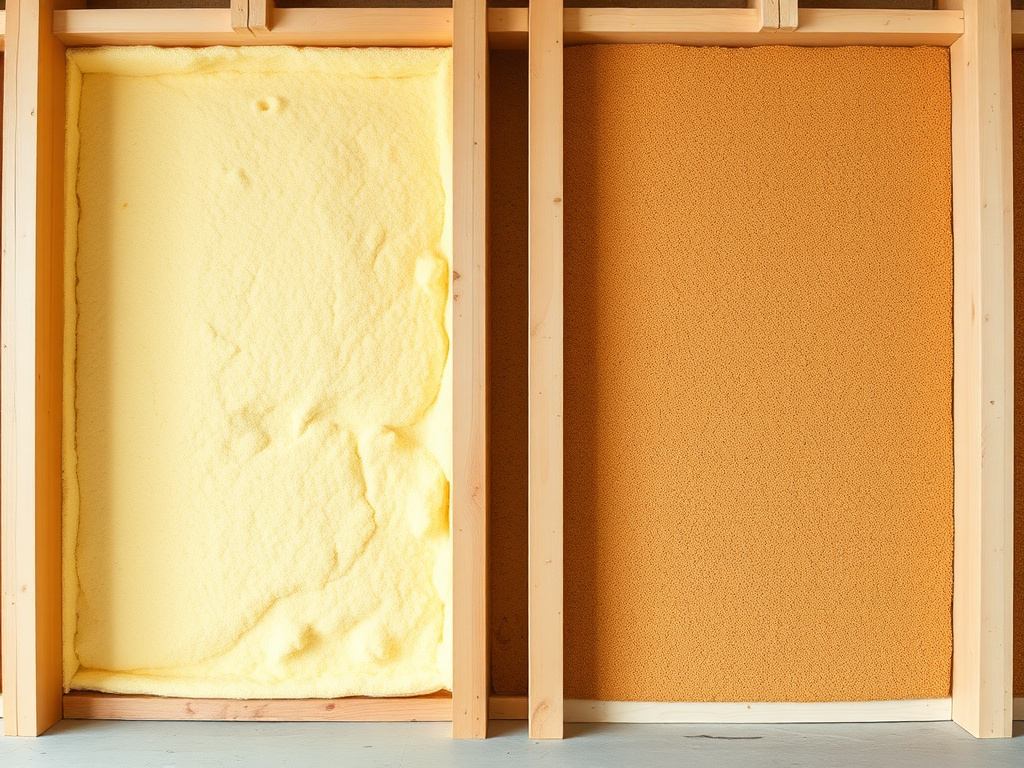
Fiberglass batts and blown-in insulation reduce heat transfer through the material itself, but they don't seal the gaps around wiring, plumbing, and framing where air actually moves — in either direction, depending on the season. Spray foam expands to seal those gaps completely as it insulates, which means the same application that stops summer heat infiltration also stops winter warm-air loss. That two-way performance is where spray foam's advantage over batts is most obvious in a climate like Kingman's, compared to a purely hot-dry market where only one direction matters.
Where closed-cell earns its keep here
Closed-cell foam's vapor-retarding property is a bigger practical advantage in Kingman than it would be in Phoenix, simply because Kingman sees real winter moisture and occasional freeze-thaw cycling that a pure low-desert climate doesn't. For roof decks and exterior-exposed assemblies especially, that's a genuine reason to lean toward closed-cell here more often than a low-desert contractor would recommend.
Frequently asked questions
Yes. Average January lows sit near freezing, and the area has recorded hard freezes overnight — a real difference from the Phoenix metro despite sharing the same IECC code zone. That's enough of a heating load that an air-sealed, well-insulated envelope makes a measurable difference in winter comfort and heating costs, not just summer cooling costs.
The core materials are the same — open-cell and closed-cell spray foam — but the application strategy shifts. We lean toward closed-cell more often for exterior-exposed and roofline applications here, given Kingman's real winter moisture and freeze exposure, and we frame the whole project around a two-season return rather than a cooling-only one.
Ready for a free quote?
Tell us about your home and we'll build a clear, no-pressure quote.